
Looking Ahead in Berks County: An Assessment of Future Workforce Needs
The Place
Home to more than 425,000 residents in southeastern Pennsylvania, Berks County faces a changing workforce and evolving employer needs following the COVID pandemic. In February 2025, the Berks County Workforce Development Board partnered with TPMA to assess current and future talent needs, identify workforce challenges, and develop strategies to strengthen workforce participation, skill development, talent attraction and retention, and employer engagement through 2030.


The Project
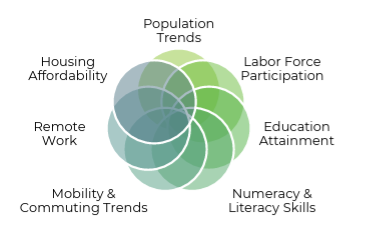
TPMA conducted comprehensive workforce assessment examining demographic and labor market trends, future talent demand, workforce skills, and higher wage career opportunities across key industries, including manufacturing and healthcare. The research also evaluated foundational skills such as literacy, numeracy, and English language proficiency, alongside factors influencing workforce participation and regional talent attraction and retention, including commuting patterns, remote work, housing affordability, and career advancement. Particular attention was given to young adults, incumbent workers, and individuals facing employment barriers, as well as opportunities to strengthen connections between higher education institutions and local employers to retain and attract talent.
To complement our quantitative analysis, we conducted employer surveys and structured stakeholder conversations with businesses, educators, workforce organizations, and community partners. This approach combined labor market data with local perspectives to validate findings, identify workforce challenges, and inform actionable regional strategies. With more than 100 employers responding to our survey, and nearly 40 participating in focus groups and interviews, we gained a wide array of perspectives from employers.
The Report and Recommendations
TPMA synthesized the research and stakeholder findings into Berks Workforce 2030, a comprehensive workforce assessment with actionable recommendations to guide regional workforce planning and investment. Recommendations focused on strengthening workforce participation, talent pipeline development, foundational and technical skills, employer engagement, and regional talent attraction and retention, while addressing barriers such as housing, transportation, and childcare.
TPMA also developed a consolidated recommendations resource and supporting communications materials to help the Workforce Development Board engage partners, align resources, and advance implementation.

The Results and Reflections
In early 2026, the Board began using the report to facilitate discussions with business leaders, industry representatives, and community partners to align priorities, identify opportunities for collaboration, and put recommendations into action. The project provided an evidence-based foundation for coordinating workforce investments, strengthening regional partnerships, and supporting long term economic competitiveness.
Reflecting on the project, Senior Consultant Kelsey Simpson shared, “What I enjoy most about this work is the opportunity to make a meaningful impact at the local level. By listening to employers and community partners and connecting their perspectives with the data, we can help turn local challenges into practical strategies that create lasting opportunities for the community.”